The Victoria and Albert Museum in London is described as the world’s leading museum of art and design. While the V&A may not seem like a place you would find many miniatures there are some amazing examples in their collections. My definition of what counts as a miniature may differ from yours but I believe every miniaturist should look at this kind of work because making scaled models or objects utilizes the same skills and viewpoints found in these objects.

This German altarpiece from 1520 depicts St. Margaret in a series of tableaux showing her being tortured because she will not renounce Christianity. The design reminds me of a comic book with actions taking place in a series of panels. You can find similar altarpieces in every collection of 16th century art 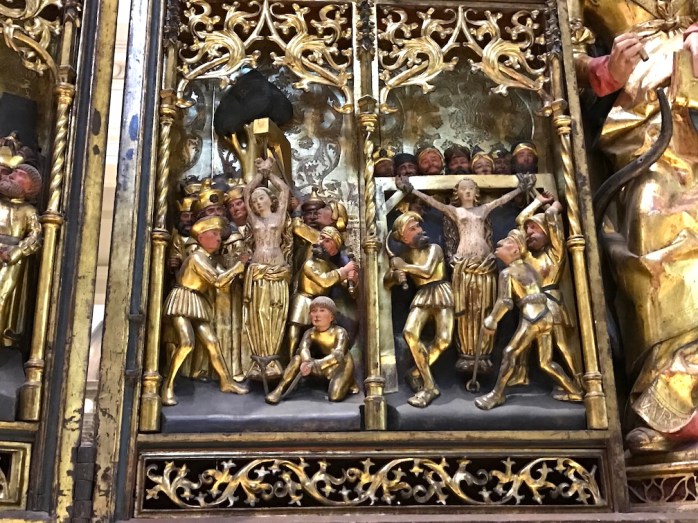
Detail of figures. 
Exquisitely detailed carved 16th century prayer beads are available for viewing in several famous museum. This one is about 2 inches across and like other beads depicts a Biblical scene. 
Model of the state coach, 1760. The full scale version was created during the reign of King George III. 
Model of an 18th to 19th century home in Northumberland. Created in 2001. 
Early 19th century micromosaic. Using up to 5000 pieces (tesserae) make the images look almost painted. 
Micromosaic plaque with basket of flowers, 1825 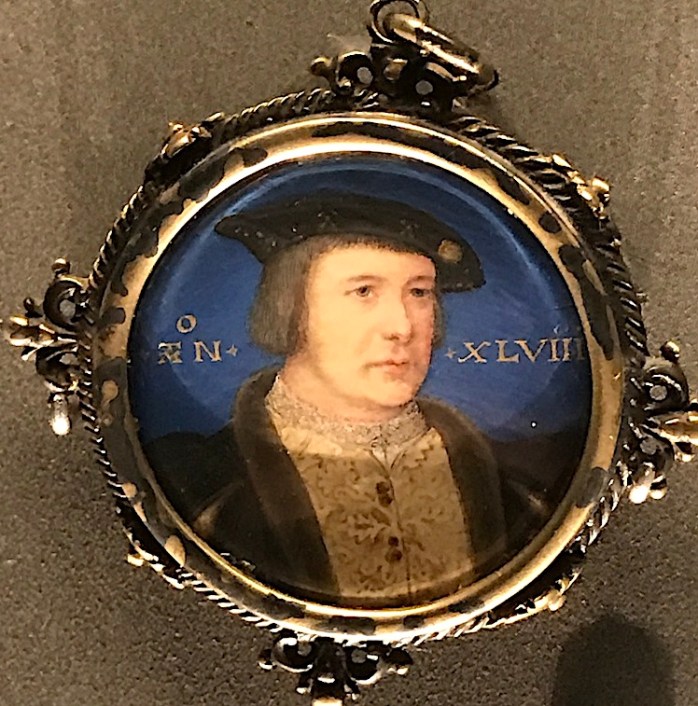
Miniature painted portraits began around the 1520s and became very popular across Europe. These portraits were worn like medals, sometimes representing a loved one or secret love. This one is about 2 inches across. 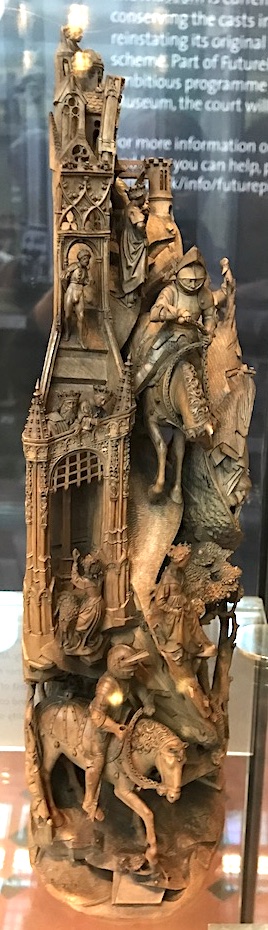
Carvings of wood and ivory were popular objects favored by wealthy patrons. The piece here is about 16 inches tall and includes detailed carving all around. 
Detail.
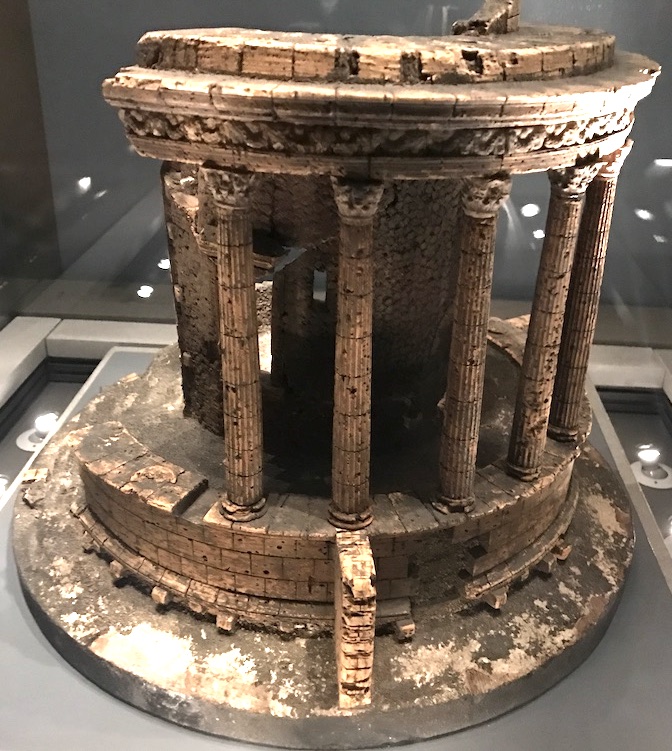
Cork model of the Temple of Vesta at Tivoli, 1770. 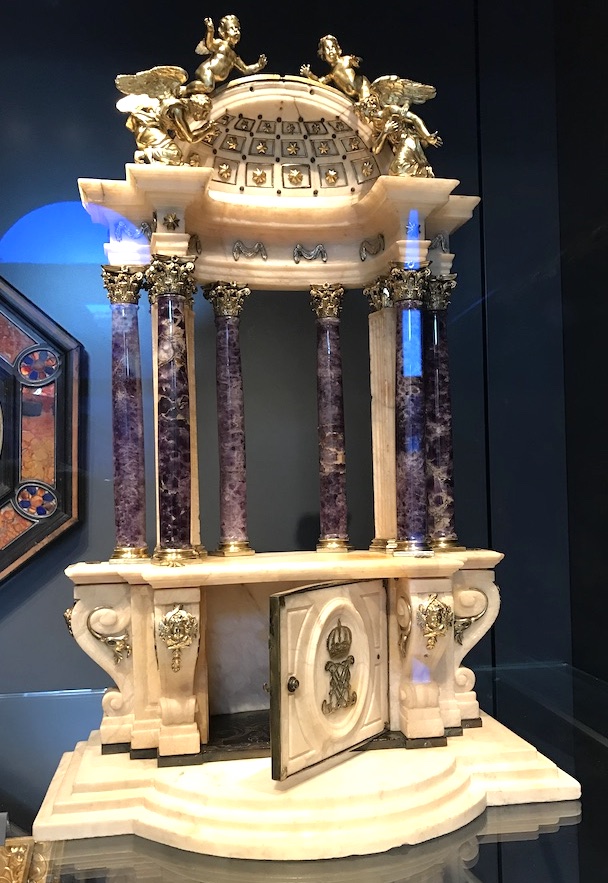
This is a house altar from about 1750. I am not sure if these were merely decorative or were used for some ceremonies.
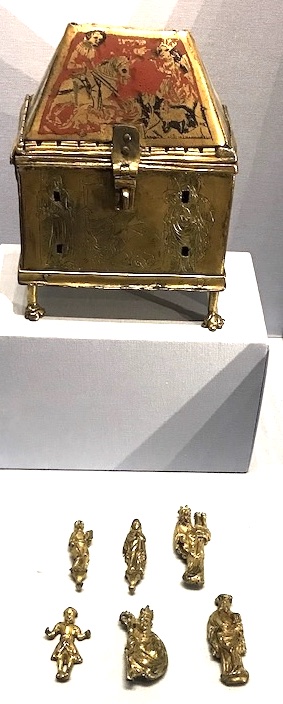
A 15th century reliquary (a container holding the remains of a saint) casket, as well as reliquaries in other forms, often have miniatures incorporated. These miniature figures are a few inches tall.
 The Museum of Miniatures